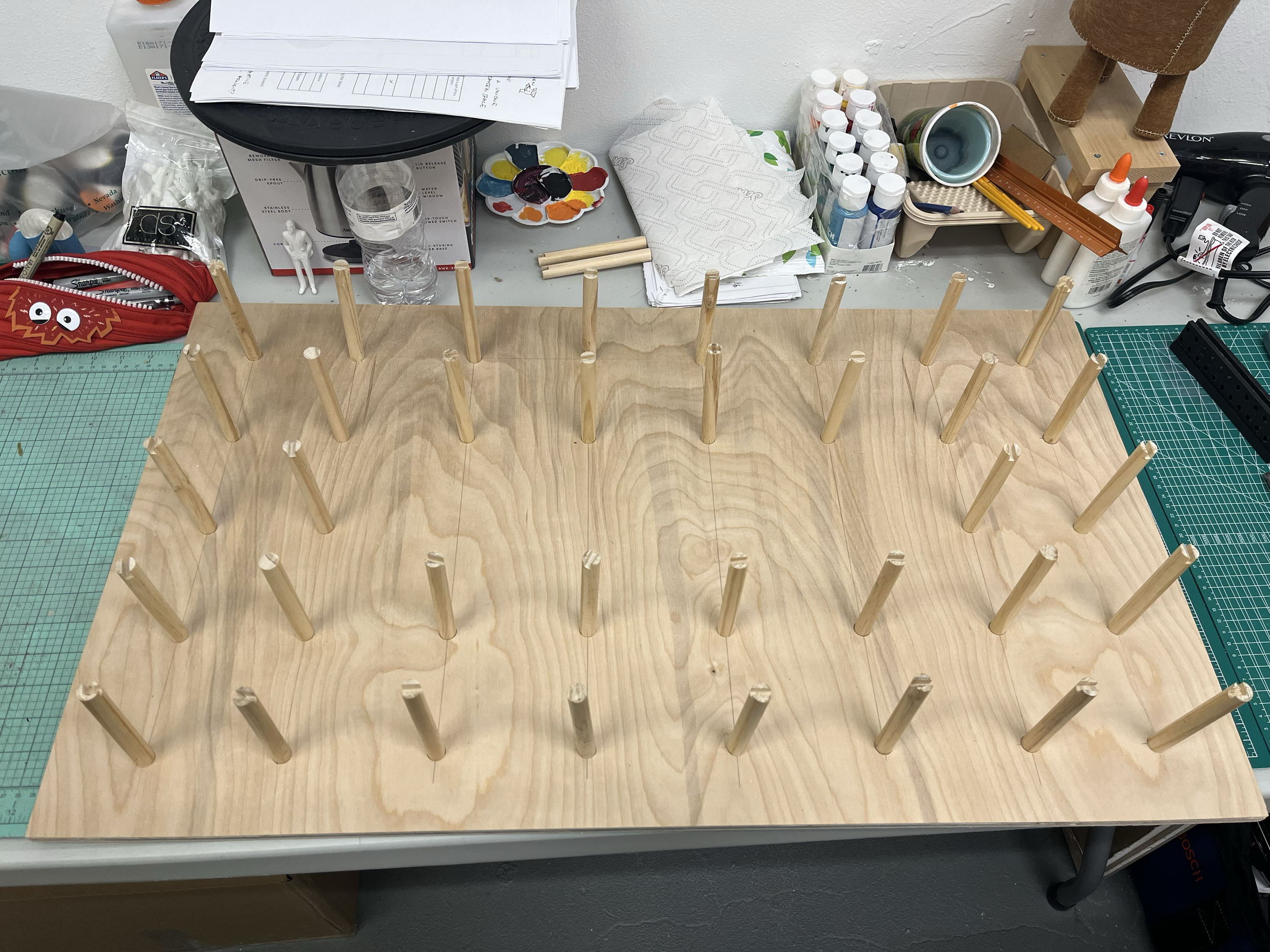
The current phase of the research involves studying relevant literature on traditional Chinese architecture and utilizing 3D modeling tools to assist in understanding the temple’s complex structural system. Based on this research, a one-quarter scale physical wooden model of the Main Hall’s timber framework has been completed, highlighting key features such as the beam structure, column grid layout, and bracket sets (dougong). By integrating traditional craftsmanship with modern techniques, this study seeks to gain a more comprehensive understanding of Foguang Temple’s technological importance in architectural history, while also exploring its relevance and inspiration for contemporary timber construction design.
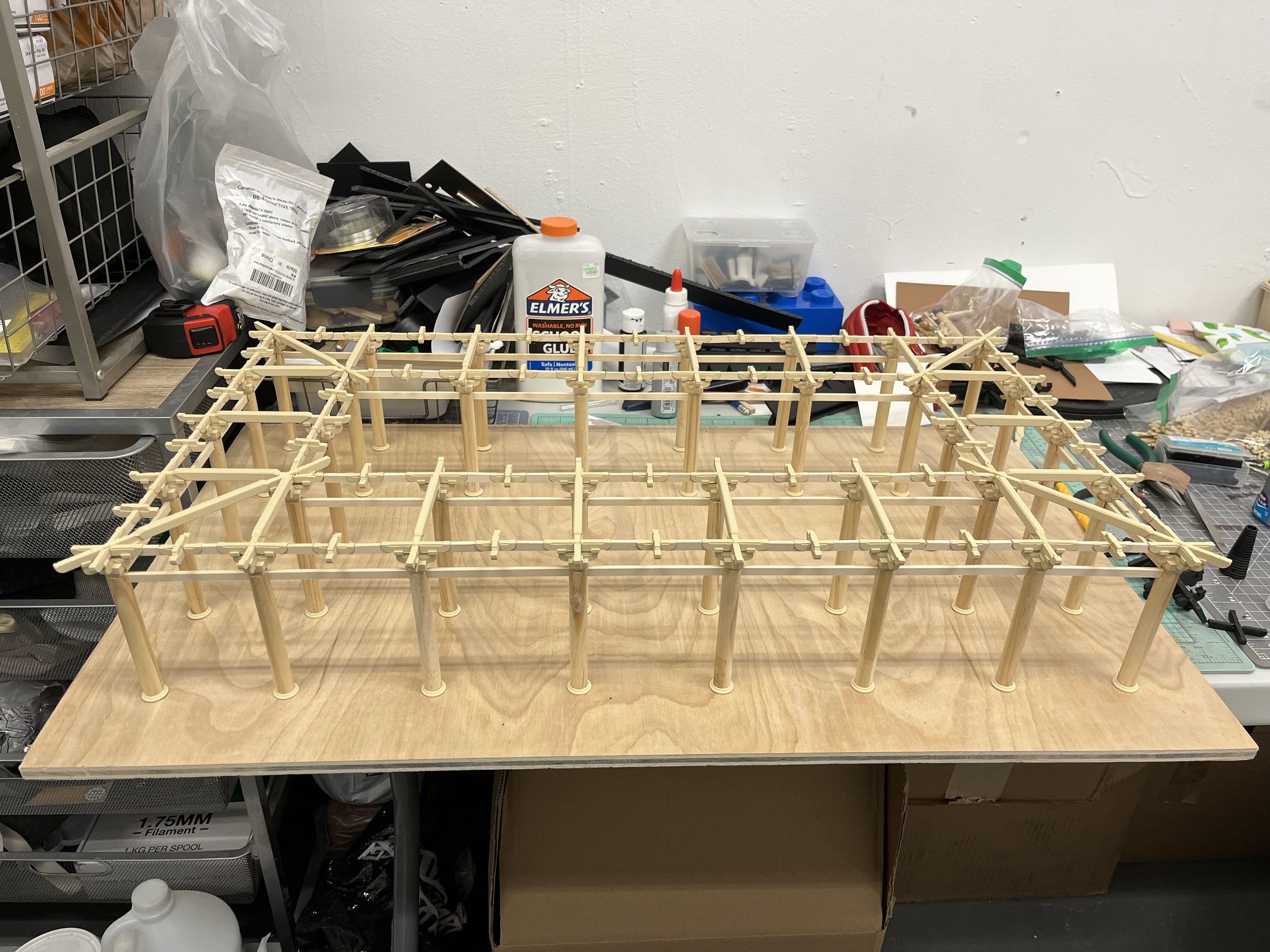
The current phase of the research involves studying relevant literature on traditional Chinese architecture and utilizing 3D modeling tools to assist in understanding the temple’s complex structural system. Based on this research, a one-quarter scale physical wooden model of the Main Hall’s timber framework has been completed, highlighting key features such as the beam structure, column grid layout, and bracket sets (dougong). By integrating traditional craftsmanship with modern techniques, this study seeks to gain a more comprehensive understanding of Foguang Temple’s technological importance in architectural history, while also exploring its relevance and inspiration for contemporary timber construction design.
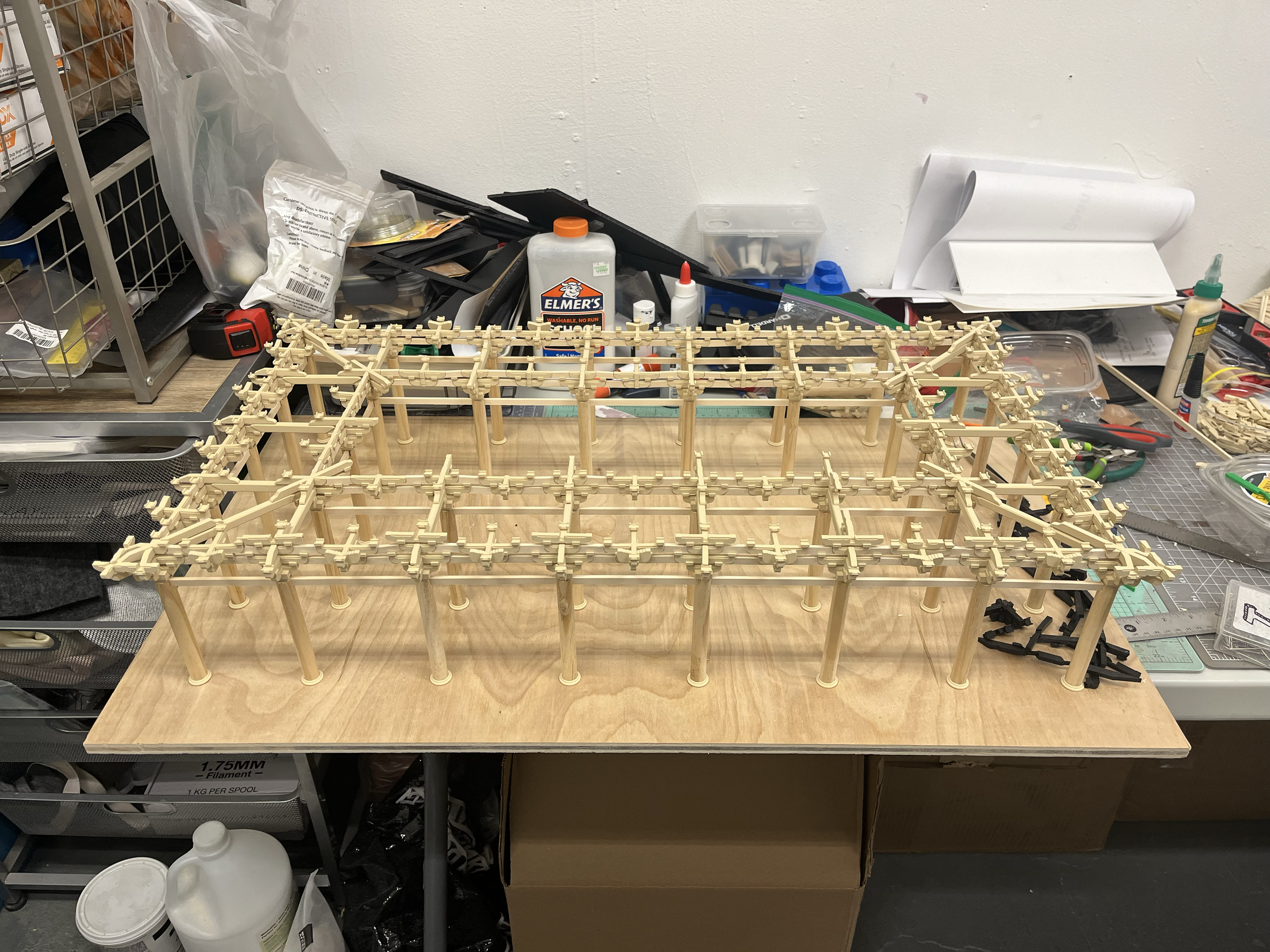
The current phase of the research involves studying relevant literature on traditional Chinese architecture and utilizing 3D modeling tools to assist in understanding the temple’s complex structural system. Based on this research, a one-quarter scale physical wooden model of the Main Hall’s timber framework has been completed, highlighting key features such as the beam structure, column grid layout, and bracket sets (dougong). By integrating traditional craftsmanship with modern techniques, this study seeks to gain a more comprehensive understanding of Foguang Temple’s technological importance in architectural history, while also exploring its relevance and inspiration for contemporary timber construction design.
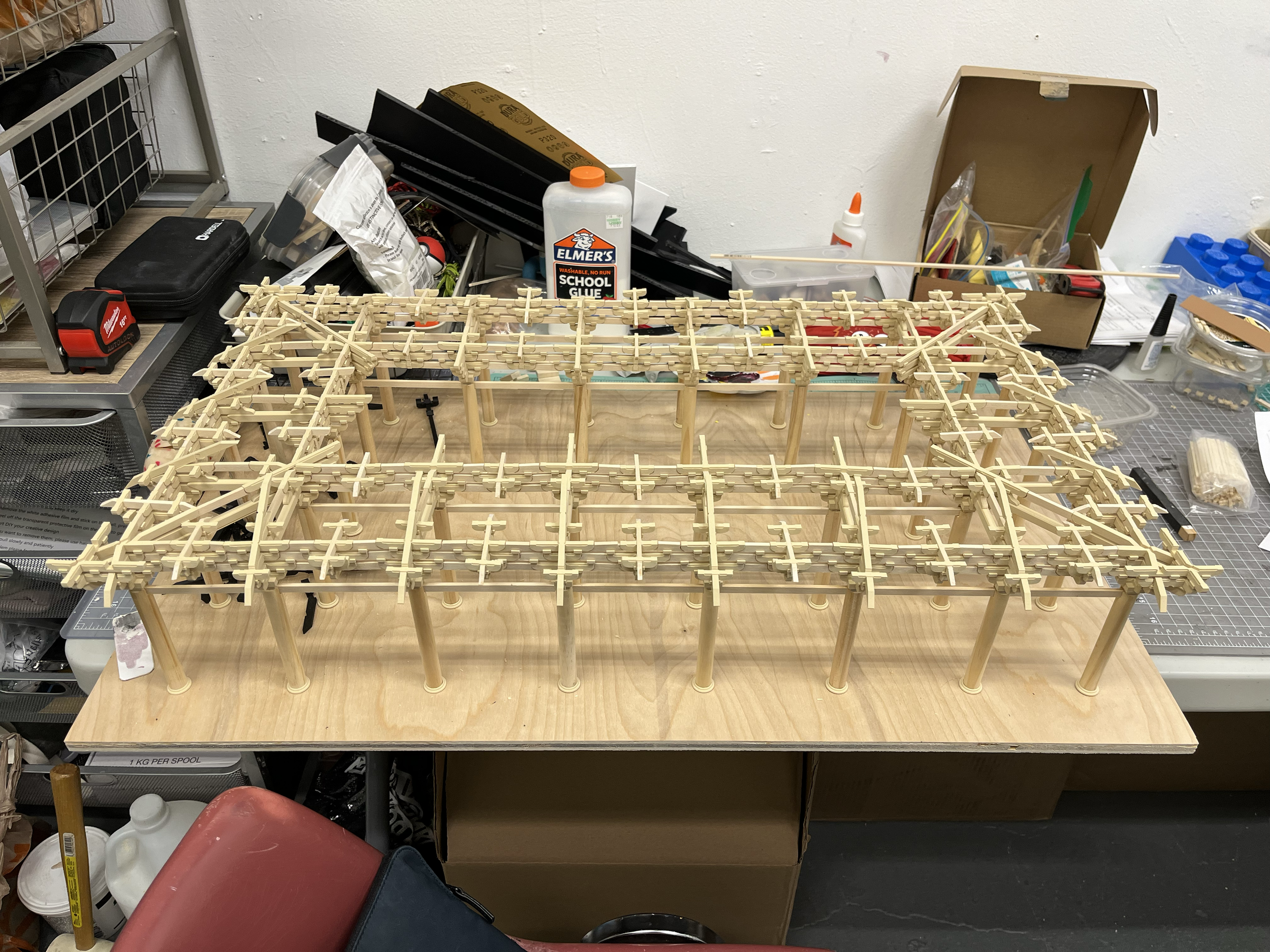
The current phase of the research involves studying relevant literature on traditional Chinese architecture and utilizing 3D modeling tools to assist in understanding the temple’s complex structural system. Based on this research, a one-quarter scale physical wooden model of the Main Hall’s timber framework has been completed, highlighting key features such as the beam structure, column grid layout, and bracket sets (dougong). By integrating traditional craftsmanship with modern techniques, this study seeks to gain a more comprehensive understanding of Foguang Temple’s technological importance in architectural history, while also exploring its relevance and inspiration for contemporary timber construction design.
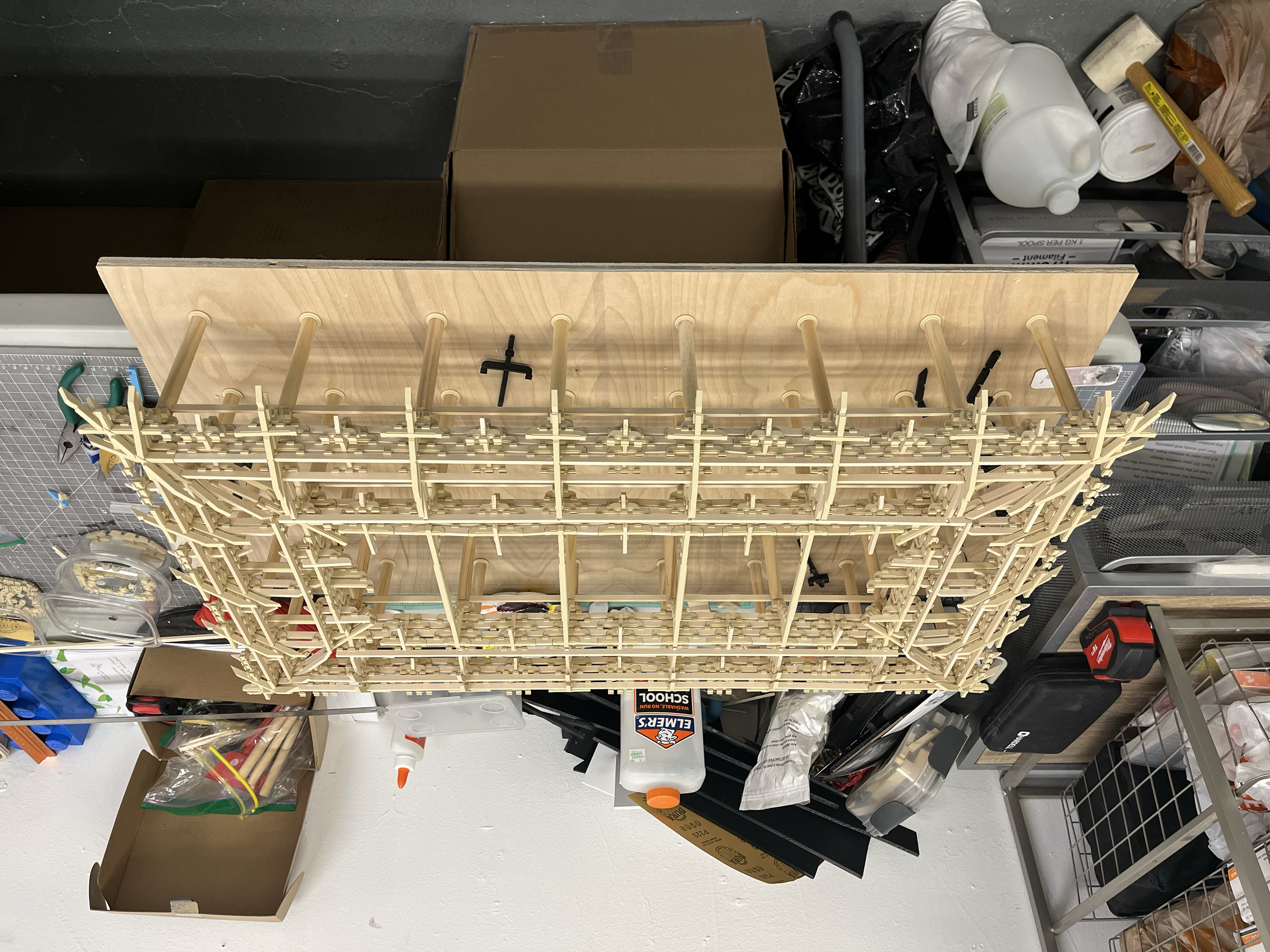
The current phase of the research involves studying relevant literature on traditional Chinese architecture and utilizing 3D modeling tools to assist in understanding the temple’s complex structural system. Based on this research, a one-quarter scale physical wooden model of the Main Hall’s timber framework has been completed, highlighting key features such as the beam structure, column grid layout, and bracket sets (dougong). By integrating traditional craftsmanship with modern techniques, this study seeks to gain a more comprehensive understanding of Foguang Temple’s technological importance in architectural history, while also exploring its relevance and inspiration for contemporary timber construction design.
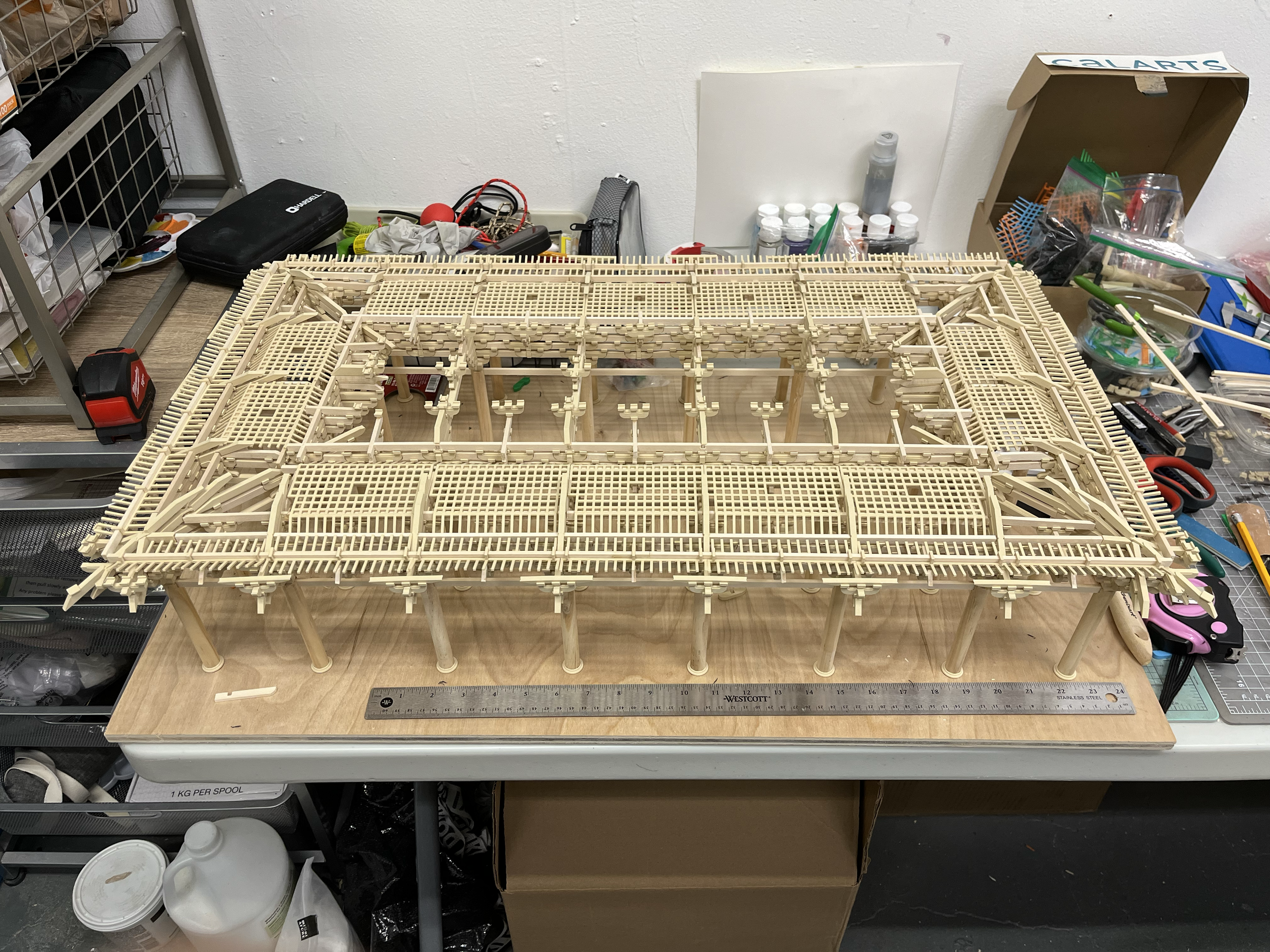
The current phase of the research involves studying relevant literature on traditional Chinese architecture and utilizing 3D modeling tools to assist in understanding the temple’s complex structural system. Based on this research, a one-quarter scale physical wooden model of the Main Hall’s timber framework has been completed, highlighting key features such as the beam structure, column grid layout, and bracket sets (dougong). By integrating traditional craftsmanship with modern techniques, this study seeks to gain a more comprehensive understanding of Foguang Temple’s technological importance in architectural history, while also exploring its relevance and inspiration for contemporary timber construction design.
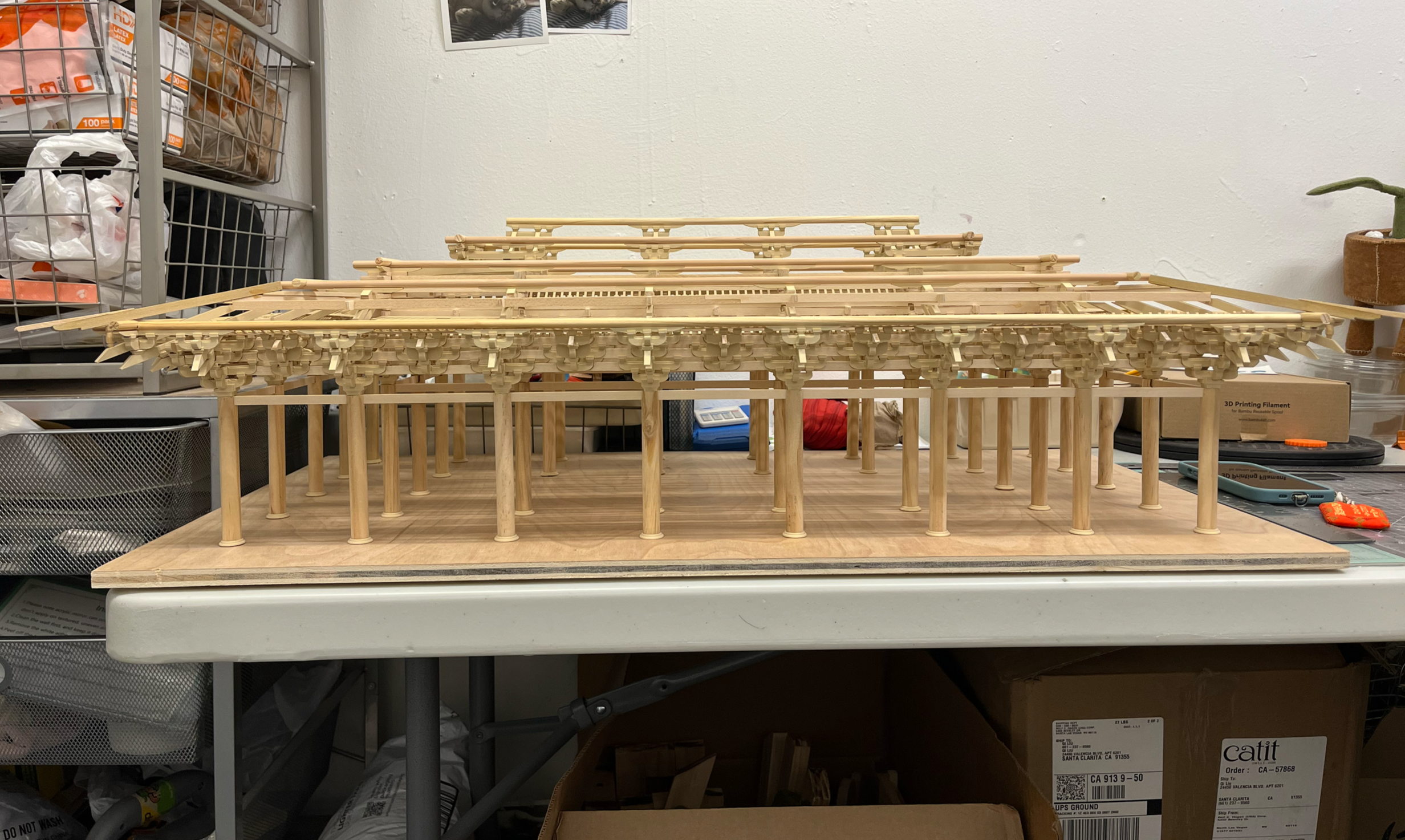
The current phase of the research involves studying relevant literature on traditional Chinese architecture and utilizing 3D modeling tools to assist in understanding the temple’s complex structural system. Based on this research, a one-quarter scale physical wooden model of the Main Hall’s timber framework has been completed, highlighting key features such as the beam structure, column grid layout, and bracket sets (dougong). By integrating traditional craftsmanship with modern techniques, this study seeks to gain a more comprehensive understanding of Foguang Temple’s technological importance in architectural history, while also exploring its relevance and inspiration for contemporary timber construction design.